
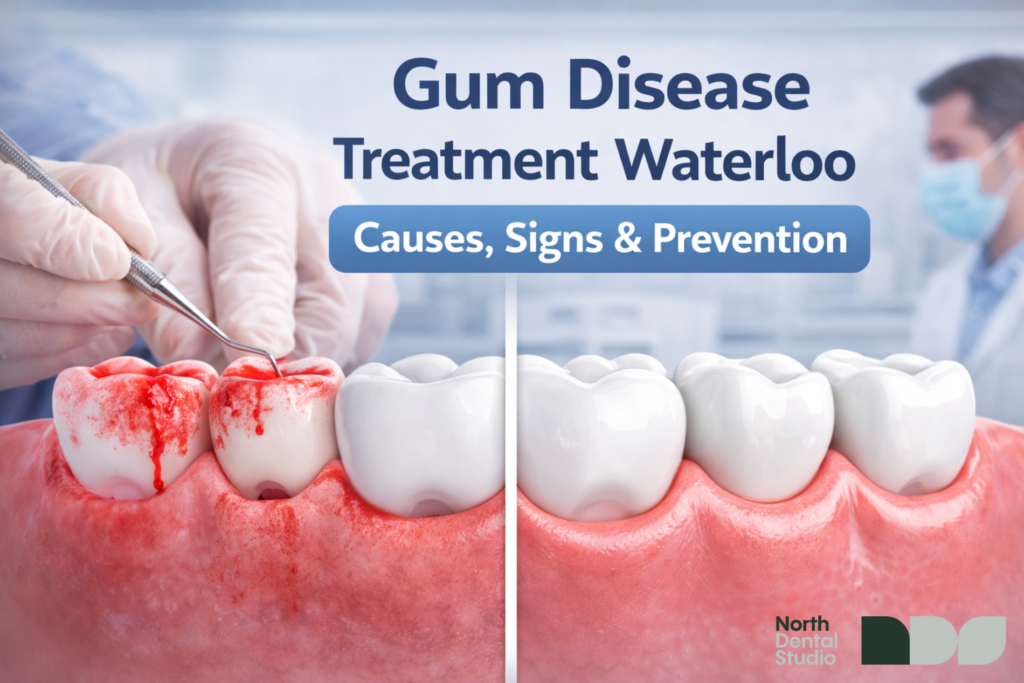
It usually starts with something small. Maybe you notice a little blood when you brush. Or your gums feel slightly sore one day. You tell yourself it’s nothing—maybe you brushed too hard. But these small signs can be your body’s way of telling you something isn’t right. If you’ve been noticing symptoms like this, you’re not alone. Many people only start looking into gum disease treatment in Waterloo when things get uncomfortable—but catching it early makes everything much easier.
At North Dental Studio, we often meet patients who wish they had paid attention to these early signs sooner. The good news is, gum disease is very manageable when caught early.
What Is Gum Disease (In Simple Terms)?
Gum disease is basically an infection in your gums caused by bacteria.
It doesn’t appear suddenly. It builds up slowly over time—usually starting with plaque, that thin sticky layer on your teeth.
At first, it may only cause mild irritation. But if ignored, it can gradually lead to more serious problems.
Common early signs include:
- Bleeding while brushing or flossing
- Red or puffy gums
- Bad breath that doesn’t go away
- Gums that feel sensitive or tender
A lot of people think bleeding gums are normal. They’re not—they’re one of the earliest warning signs.
What Actually Causes It?
The biggest cause is something very simple: plaque that isn’t removed properly.
When plaque stays on your teeth, it hardens into tartar, which irritates your gums and allows bacteria to grow.
Here are some common bleeding gums causes you might relate to:
Not Brushing or Flossing Properly
Life gets busy, and sometimes routines slip. Even small gaps in oral care can lead to buildup.
Smoking
Smoking affects blood flow to your gums and slows down healing.
Hormonal Changes
Changes during pregnancy or even stress can make gums more sensitive.
Diabetes
People with diabetes often have a higher risk of gum infections.
Diet and Stress
What you eat—and how stressed you are—can affect how well your body fights infection.
Why It’s Better Not to Ignore It
In the early stage, gum disease is easy to manage.
But if it’s ignored, it can slowly progress and lead to:
- Gums pulling away from teeth
- Loose teeth
- Bone damage
- Tooth loss
It can also impact your overall health over time.
That’s why seeking gum disease treatment in Waterloo early can save you from much bigger problems later.
How You Can Prevent It (Simple Habits That Work)
The good news? Prevention is simple and very doable.
Brush Gently but Regularly
Twice a day is enough—just be consistent.
Don’t Skip Flossing
This is where most people struggle, but it makes a huge difference.
Keep Up With Dental Visits
Regular checkups help catch small issues early.
Watch Your Diet
Less sugar, more balanced meals—your gums will thank you.
Avoid Smoking
If you smoke, even reducing can help improve gum health.
When Should You See a Dentist?
If your gums are trying to tell you something, it’s better to listen early.
You should consider seeing a dentist if you notice:
- Bleeding gums regularly
- Swelling or redness
- Bad breath that doesn’t improve
- Gums pulling away from teeth
Getting gum disease treatment in Waterloo at the right time can prevent the issue from getting worse.
A Gentle Approach at North Dental Studio Waterloo
At North Dental Studio, we understand that gum problems can feel worrying—but treatment doesn’t have to be stressful.
We focus on:
- Early detection
- Comfortable, gentle care
- Clear explanations
- Practical advice you can follow at home
Our goal is to help you feel in control of your oral health, not overwhelmed by it.
Final Thoughts
Gum disease doesn’t usually hurt in the beginning—that’s why it’s so easy to ignore.
But your gums often give you small warning signs. Paying attention to them early can make all the difference.
By understanding common bleeding gums causes and taking simple steps, you can protect your smile and avoid future problems.
Healthy gums don’t just happen—they’re built through small, consistent habits.